Ecosystem Bridge
Building the Bridge: From Ecosystem Research to Ecosystem Practice
A curated one-day Cambridge–TUM symposium for managers, founders, investors, policymakers, and ecosystem builders. It connects business ecosystems and regional innovation ecosystems, translating research into practical frameworks and collaborations to design, govern, scale, and sustain them.

Connecting business ecosystems and regional innovation ecosystems
Many organisations now operate in business ecosystems shaped by corporate keystones, platform leaders, complementors, investors, and customers. At the same time, governments, universities, founders, and regional institutions are working to strengthen innovation ecosystems.
Yet there are still too few forums that help leaders connect these two worlds and think clearly about how ecosystems are designed, governed, scaled, and sustained in practice.
Ecosystem Bridge addresses that strategic gap by translating rigorous research into usable frameworks rather than treating ecosystem strategy as an abstract concept.
Designed for depth over breadth: around 100 curated participants in one day, with a deliberate mix of keynotes, workshops, and roundtables that prioritise exchange, application, and grounded discussion.
A clear, shared mission
"Translate ecosystem research into usable frameworks, practical tools, and new collaborations that help managers, founders, investors, universities, policymakers, and regional leaders act more deliberately, whether orchestrating a corporate business ecosystem, participating in one, or building the conditions for regional innovation to flourish."
- 01.Translate ecosystem research into usable, business-friendly frameworks, practical tools, and new collaborations.
- 02.Help managers, founders, investors, universities, policymakers, and regional leaders act more deliberately, whether orchestrating a corporate business ecosystem, participating in one, or building the conditions for regional innovation to flourish.
- 03.Create grounded dialogue on what it actually takes to build, scale, participate in, and benefit from high-impact ecosystems.
- 04.Anchor the symposium in concrete outputs such as community building, a white paper, practical tools, and future collaboration opportunities, so its relevance extends well beyond the day itself.
One day. 100 participants. Depth, exchange, application.
A curated format combining keynotes for inspiration, workshops for application, and roundtables for co-creation. It brings academia, startups, corporates, investors, policymakers, and ecosystem builders into the same room for grounded discussion about what it actually takes to build, scale, participate in, and benefit from high-impact ecosystems.
Keynotes
Inspiration from leading scholars and practitioners shaping business ecosystems.
Workshops
Hands-on application of frameworks to live strategic ecosystem challenges.
Roundtables
Cross-sector co-creation on the questions that matter most in ecosystem practice.
Community Building
Structured networking and lasting cross-sector relationships beyond the day itself.
Academia, startups, corporates, investors, policymakers, and ecosystem builders in the same room
Around 100 curated participants, intentionally drawn across sectors to enable rigorous, grounded, and practice-oriented dialogue on what it actually takes to build, scale, participate in, and benefit from high-impact ecosystems.
Academia
Leading scholars working on business ecosystems and innovation.
Startups
Founders and scale-up leaders building in fast-moving ecosystems.
Corporates
Innovation and strategy leaders shaping ecosystems from major firms.
Investors
Venture, growth, and impact capital across stages.
Policymakers
Public-sector leaders from Germany, the UK, and Europe.
Ecosystem builders
Intermediaries, programs, and institutions connecting and strengthening regional innovation.
Concrete outputs. Lasting community.
The ambition is not simply to discuss ecosystems, but to help make ecosystem-level thinking a more usable and mainstream approach to strategy, innovation, and regional growth, anchored in tangible outputs so relevance extends well beyond the day itself.
- 01Community building across academia, startups, corporates, investors, and policymakers
- 02A white paper capturing lessons learned on ecosystem strategy and practice
- 03Practical tools and frameworks for managers, founders, and policymakers
- 04Future collaboration opportunities, including Horizon Europe 2027 ideas
- 05High-level peer dialogue and structured cross-sector exchange
- 06An ongoing network that extends the symposium's relevance well beyond the day itself
An evolving, cross-sector community
The list below is illustrative and evolving. Final institutional participation is subject to confirmation.
Hosts & academic anchors
Foundations & public bodies
Leading universities
Industry, capital & policy
A joint Cambridge–TUM initiative

Chris Coleridge
University of Cambridge

Isabell Welpe
Technical University of Munich

Theresa Treffers
Technical University of Munich

Henri Stehle
Technical University of Munich
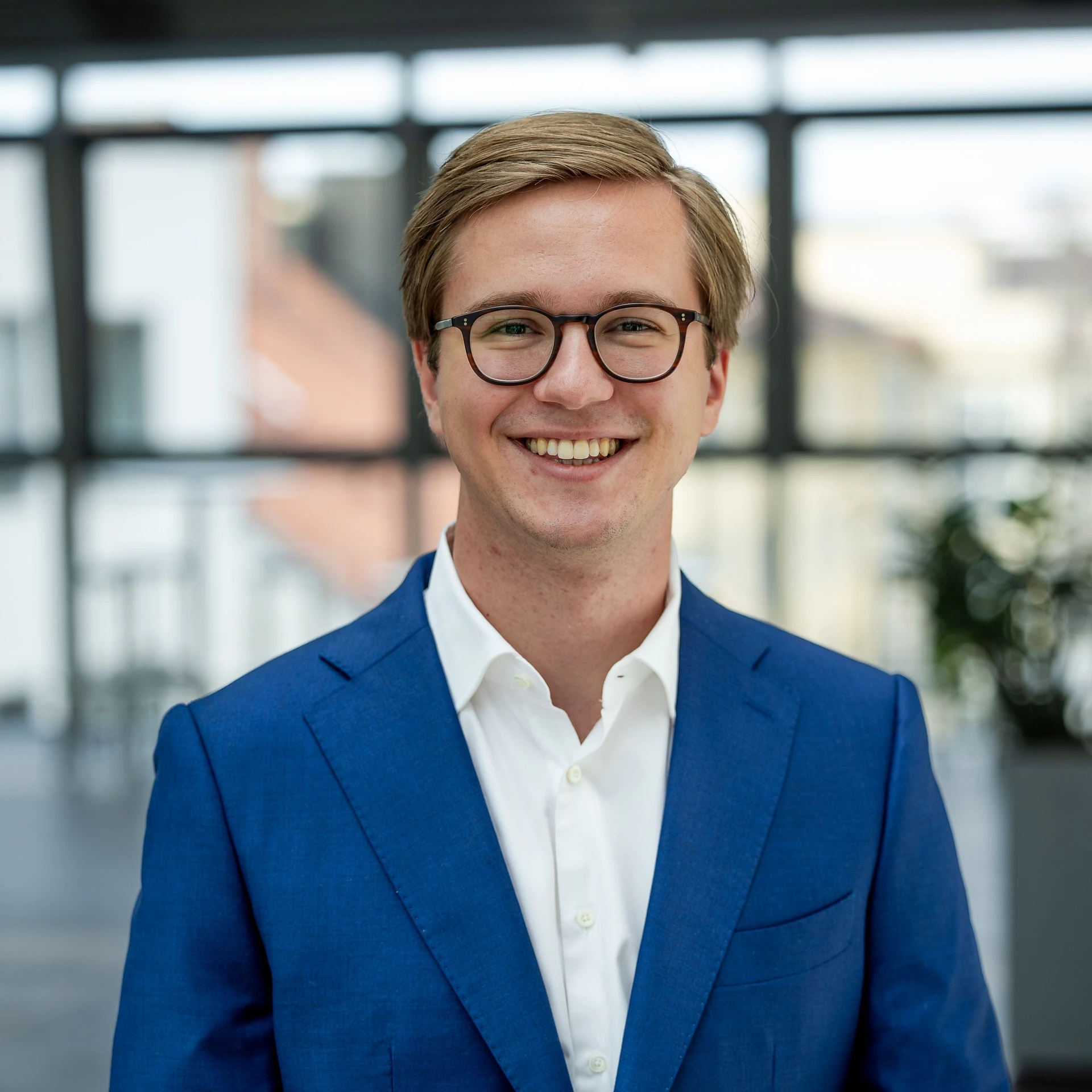
Philipp Sonnenschein
Technical University of Munich
An invitation, by introduction
Participation is curated to enable focused, high-quality dialogue across academia, startups, corporates, investors, policymakers, and ecosystem builders. For participation or inquiries, please contact the operational team.
18th March 2027
Cambridge, United Kingdom

'%3e%3cmetadata%20id='metadata13'%3e%3crdf:RDF%3e%3ccc:Work%20rdf:about=''%3e%3cdc:format%3eimage/svg+xml%3c/dc:format%3e%3cdc:type%20rdf:resource='http://purl.org/dc/dcmitype/StillImage'%20/%3e%3cdc:title%3eTUM_Web_Logo_blau%3c/dc:title%3e%3c/cc:Work%3e%3c/rdf:RDF%3e%3c/metadata%3e%3cdefs%20id='defs11'%20/%3e%3csodipodi:namedview%20pagecolor='%23ffffff'%20bordercolor='%23666666'%20borderopacity='1'%20objecttolerance='10'%20gridtolerance='10'%20guidetolerance='10'%20inkscape:pageopacity='0'%20inkscape:pageshadow='2'%20inkscape:window-width='1920'%20inkscape:window-height='986'%20id='namedview9'%20showgrid='false'%20fit-margin-top='0'%20fit-margin-left='0'%20fit-margin-right='0'%20fit-margin-bottom='0'%20inkscape:zoom='1.754386'%20inkscape:cx='124.61021'%20inkscape:cy='115.2546'%20inkscape:window-x='-11'%20inkscape:window-y='-11'%20inkscape:window-maximized='1'%20inkscape:current-layer='Ebene_1'%20/%3e%3ctitle%20id='title2'%3eTUM_Web_Logo_blau%3c/title%3e%3cdesc%20id='desc4'%3eTUM%3c/desc%3e%3cpath%20fill='%233070b3'%20d='m%20140.54052,-31%20v%20173.32822%20h%2044.72985%20V%20-31%20H%20392.146%20V%20181.46685%20H%20353.00738%20V%208.138629%20H%20308.2775%20V%20181.46685%20H%20269.13887%20V%208.138629%20H%20224.40902%20V%20181.46685%20H%20101.4019%20V%208.138629%20H%2062.26327%20V%20181.46685%20H%2023.12462%20V%208.138629%20H%20-16.014%20V%20-31%20Z'%20id='path6'%20style='stroke-width:5.59123'%20/%3e%3c/svg%3e)